
Every time there’s an article about caregiving during National Caregivers Month, there’s always a statistic about the total cost of unpaid caregiving. But it’s so much more than that. Your loved one’s diagnosis is also your diagnosis, and though you don’t personally experience the pain and fog, you still experience brain injury in a deeply personal way. You have been as much a part of the journey as your loved one, despite being overlooked at times by the system and not getting the care you needed. You were there while they slept under another drug cocktail meant to help, and when they went into another surgery. You were there for conversations they weren’t lucid enough to understand or remember. And you’ve been there ever since, standing witness to something you can’t fix but do make better. Whether or not they’ve told you before, they are grateful for your love, support, and presence.
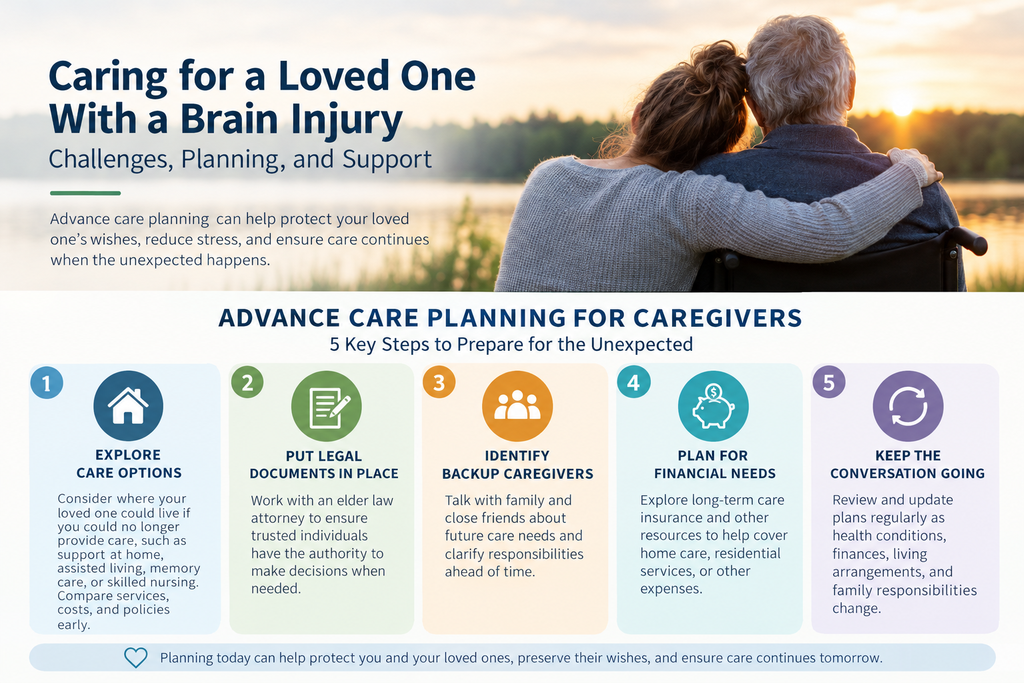
Advance Care Planning for Caregivers: How to Prepare for the Unexpected
What happens when a family caregiver becomes seriously ill, can no longer provide care, or dies before the person they support? Many patients depend on family caregivers for daily support, medical needs, and essential decision-making. But without a backup plan, an unexpected illness or death can leave families scrambling to arrange care.
“Caregiving doesn’t just happen—it takes planning, advocacy, and asking for help,” says Danielle Miura, a financial professional who advises family caregivers. She and other experts recommend discussing future care needs early, identifying backup caregivers, organizing important records, and documenting medical and financial preferences.
Caregiving can take a significant financial, physical, and emotional toll. Advance care planning helps families prepare for changing circumstances, clarify responsibilities, and reduce stress when emergencies arise. Families should also explore long-term care insurance and other financial resources that may help cover home care or residential services.
The first step is thinking about the unthinkable – where would your loved one live if their primary caregiver could no longer provide support? Start researching your options early. They can include supported living at home, residential communities, moving to assisted living, memory care, or skilled nursing, depending on individual needs. Compare services, costs, staffing, amenities, and policies for residents whose care needs increase.
Advanced planning also means ensuring trusted individuals have the legal authority to make decisions when needed, so put essential legal documents in place. Consulting an attorney who specializes in elder law can help families understand their options and meet state-specific requirements.
Important documents include:
-
- Last will and testament: Outlines how assets should be distributed after death and names an executor.
-
- Durable power of attorney for finances: Authorizes a trusted person to manage financial matters, including paying bills and arranging care, if the individual becomes incapacitated.
-
- Medical power of attorney: Designates someone to make health care decisions when a person cannot make or communicate them independently.
-
- Living will: Documents preferences for end-of-life treatments, such as resuscitation and mechanical ventilation.
-
- Physician Orders for Life-Sustaining Treatment (POLST): Where available and appropriate, records specific medical orders concerning life-sustaining treatments.
These documents serve different purposes, and requirements vary by state. Families should review them regularly and update designated decision makers if circumstances change.
Advance care planning is not a one-time task; it’s an ongoing conversation. Health conditions, finances, living arrangements, and family responsibilities can change over time. Planning for the unexpected is an essential part of caregiving, and taking steps today can help protect you and your loved ones, preserve their wishes, and ensure care continues when circumstances change.
TBI Caregivers: Challenges, Research, and Support
Traumatic brain injury (TBI) affects more than the person who sustains the injury. Family caregivers often face emotional stress, financial pressure, and the demands of providing long-term care. Research suggests that caregiver burden is influenced by the patient’s cognitive function, the duration of caregiving, uncertainty about recovery, and the caregiver’s psychological resilience. 2 Understanding these challenges can help families prepare for the unexpected, access appropriate resources, and protect their own well-being while caring for a loved one.
Moderate-to-severe TBI can lead to cognitive difficulties, changes in behavior, reduced independence, and ongoing rehabilitation needs. These challenges may require caregivers to take on additional responsibilities, from managing medical appointments and medications to assisting with everyday activities. Studies have found that cognitive function, the duration of caregiving, and caregivers’ education levels were significant predictors of burden.
Patients experiencing more significant cognitive difficulties may require additional supervision and assistance, increasing the demands placed on family members. The same study found that longer caregiving duration was associated with greater caregiver burden. As responsibilities continue, caregivers may experience cumulative stress, reduced personal time, and difficulties balancing caregiving with employment, family life, and financial obligations.
Caregiving can also affect household income when family members reduce working hours or leave employment to provide support. Families with limited financial resources may face additional challenges paying for rehabilitation, home modifications, transportation, and professional care. Expectations, coping strategies, financial circumstances, and willingness to seek help may all contribute to the challenges caregivers face. Recognizing these pressures early can help families identify when additional support is needed.
When caregivers do not understand the patient’s condition, likely recovery trajectory, or future care needs, they may feel less confident about making decisions and managing responsibilities. Uncertainty can become particularly challenging when patients experience cognitive impairment or require long-term assistance.
Supporting the caregiver supports recovery. By improving access to rehabilitation and addressing the practical demands of long-term care, families and health care teams can help caregivers feel better prepared and better supported throughout the recovery journey.
Here are a few ways to help them:
-
- Provide clear information: Explain the injury, rehabilitation goals, possible cognitive and behavioral changes, and anticipated care needs.
-
- Promote rehabilitation: Support appropriate physical, cognitive, and functional rehabilitation to help patients maintain or regain independence.
-
- Offer caregiver education: Teach practical skills for daily care, communication, safety, and managing behavioral changes.
-
- Address emotional well-being: Provide access to counseling, peer support groups, and other psychosocial resources.
-
- Plan for respite and backup care: Identify people and services to provide temporary help when the primary caregiver needs rest or cannot provide care.
-
- Explore financial resources: Help families investigate insurance coverage, community services, disability benefits, and other eligible assistance.
-
- Reassess needs regularly: Care requirements and caregiver capacity can change over time, making ongoing assessment essential.
By reducing uncertainty, strengthening psychological resilience, and providing appropriate support, health care professionals can help caregivers feel better prepared to manage the challenges of caring for a loved one with a traumatic brain injury.
How Culture and Life Circumstances Shape the Caregiving Experience
Caregiving is influenced by more than medical needs. Cultural values, family expectations, financial resources, and access to support services all shape how caregivers experience their roles and the challenges they face.
A 2023 study of White, Hispanic, and Asian American caregivers found differences in caregiving concerns, services provided, and awareness of available resources. For example, Hispanic and Asian American caregivers reported less familiarity with government programs, while Asian American caregivers expressed greater concern about family members’ health knowledge. Across all groups, caregivers described significant nonmedical needs, including help navigating healthcare systems, benefits, and community services.
Cultural values can influence how people understand family responsibility, seek assistance, and evaluate their caregiving experiences. Some caregivers may view caring for a relative as an expected family role, while others may be more comfortable sharing responsibilities with professionals or outside services. A study found Black and Hispanic participants reported stronger traditional beliefs about caregiving as a responsibility than White participants. Black caregivers also reported lower perceived caregiving burden on two assessment measures.
Health care professionals and social workers can help families navigate resources, including respite care, caregiver education, financial assistance, counseling, and community support. Depending on individual circumstances, resources may include respite care, caregiver training, financial assistance, counseling, and community support organizations.
Helpful strategies include:
-
- Providing clear, accessible health information.
-
- Respecting family values without making cultural assumptions.
-
- Connecting caregivers with financial and community resources.
-
- Encouraging shared responsibilities and respite care.
-
- Regularly reassessing caregivers’ needs and well-being.
Effective caregiver support begins with listening. Caregivers come from diverse backgrounds, and their needs cannot be understood through a single cultural or demographic lens. Providing information in accessible language and appropriate languages, when needed, can also help families make informed decisions. Culturally responsive caregiving is not about making assumptions based on background. It is about understanding each family’s circumstances, respecting their values, and ensuring they have the information and resources needed to care for a loved one while protecting their own well-being.
At Trial: The Value of Unpaid Caregiving
When someone suffers a serious injury, the effects extend far beyond medical bills and lost wages. Everyday tasks that were once routine, such as bathing, dressing, preparing meals, managing medications, driving to appointments, or providing supervision, may suddenly require assistance. In many cases, spouses, parents, adult children, or close friends become unpaid caregivers, dedicating hours each day to meeting these needs.
There are a host of hidden costs for caregiving. Unpaid caregivers often make significant personal sacrifices. They may reduce their work hours, forgo career opportunities, use vacation time, or experience emotional and physical strain as they care for an injured loved one.
Personal injury law seeks to make an injured person whole by compensating them for losses caused by another party’s negligence. That principle includes the reasonable value of necessary caregiving services. Jurors may not completely understand the scope of care being provided behind closed doors, but caregiver testimony often paints a powerful picture of the assistance required and the profound impact an injury has had on an individual’s independence.
Evidence may include:
-
- Daily caregiving logs documenting tasks performed
-
- Calendars showing hours spent providing care
-
- Testimony from family caregivers
-
- Medical recommendations regarding assistance needs
-
- Life care plans outlining future care requirements
-
- Economic analyses assigning value to caregiving services
Together, this evidence helps translate invisible labor into understandable and quantifiable damages.